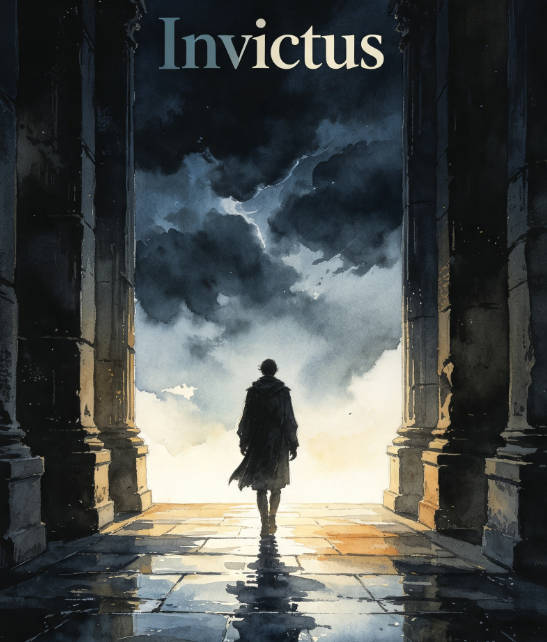
If—
Rudyard Kipling · 1910 · Four octets, continuous conditional
If you can keep your head when all about you Are losing theirs and blaming it on you, If you can trust yourself when all men doubt you, But make allowance for their doubting too; If you can wait and not be tired by waiting, Or being lied about, don't deal in lies, Or being hated, don't give way to hating, And yet don't look too good, nor talk too wise: If you can dream—and not make dreams your master; If you can think—and not make thoughts your aim; If you can meet with Triumph and Disaster And treat those two impostors just the same; If you can bear to hear the truth you've spoken Twisted by knaves to make a trap for fools, Or watch the things you gave your life to, broken, And stoop and build 'em up with worn-out tools: If you can talk with crowds and keep your virtue, Or walk with Kings—nor lose the common touch, If neither foes nor loving friends can hurt you, If all men count with you, but none too much; If you can fill the unforgiving minute With sixty seconds' worth of distance run, Yours is the Earth and everything that's in it, And—which is more—you'll be a Man, my son!
Meaning
Thirty-two lines, none of them describing a person — only conditions. The whole character study is done by what the subject must withstand.
Analysis
The poem is a single sentence held together by 'If', and that grammatical suspension is the technique. Kipling never says what a good person is; he lists what a good person survives, and lets the reader assemble the person from the wreckage.
The two impostors — 'Triumph and Disaster' — are capitalised like proper nouns, which gives them the appearance of fates arriving from outside rather than moods. Treating them 'just the same' is presented not as wisdom but as discipline, which is a far more demanding standard.
The final couplet is the only place the conditional finally pays out, and the dash before 'you'll be a Man' matters: the poem delays the reward by one beat, so the reader feels the whole edifice of conditions closing above them before the statement arrives.
Craft notes for your own writing
- Build a poem as one long conditional; the withheld conclusion creates the pressure.
- Personify abstract forces as named opponents rather than describing feelings.
- Delay your only declarative sentence until the very last line.